Bulking phase – you've probably heard this one or the other in the gym or even gone through such a phase yourself. In short, the goal of the bulking phase is to build up as many muscles and body mass as possible. This phase is followed by the definition phase, in which the built-up muscles are to be made clearly visible.
With the right nutrition you provide your body with all the nutrients it needs in sufficient quantities, so that your muscles can regenerate and grow optimally after an intensive workout. This can also prevent your body from breaking down muscle mass to meet its energy requirements.
What does the body need to build muscle?
For successful muscle building, the body needs, in addition to intensive training and a calorie surplus, mainly protein and carbohydrates: Proteins contribute to the building and maintenance of muscle mass.[1] And carbohydrates provide the body with energy during intense training sessions.[2]
Intensive muscle training

With intensive and exhausting muscle training, you lay the foundation for bulking: When you train your muscles, small injuries occur in the muscle fibers. When the body repairs these during the recovery phases, the muscles become stronger and more powerful. Since the body adapts to the strain as training progresses, it is important that you gradually increase your training performance or the strain on your body.
To support bulking, both a balanced diet and sufficient recovery periods between workouts are important. This ensures that you can train with maximum energy, your body has all the important nutrients for muscle growth available, and your muscles have enough time to recover between workouts.
Enough calories for muscle building
To effectively build mass or muscle, you should consume more calories than you burn, thus feeding yourself in a calorie surplus . You should consume between 300 and 500 kilocalories (kcal) more daily than you burn through your total expenditure. But be careful: The quality of the calories in the individual meals is important.
To consume enough calories through your diet and effectively achieve bulking, you first need to calculate your basal metabolic rate for your body weight. You can use our free calorie calculator for this. With this, you determine how many calories your body needs daily. You can also directly select a weight goal, for example "Gain weight", and have the required calorie count calculated for your individual calorie surplus.
Your total expenditure is determined by the basal metabolic rate, which the body needs for normal body functions, and the performance expenditure, which the body or the muscles need for sports activity. To not only maintain your body weight, but to be able to effectively build mass , your nutrition plan should contain correspondingly more calories than you need for your basal and performance expenditure.
Hardgainers find it difficult to build mass through nutrition. If you also have problems with bulking, we recommend our guide on the training plan and nutrition plan for hardgainers.
Macronutrients must not be missing from the nutrition plan during bulking
Our nutrition consists of three basic building blocks, the macronutrients: carbohydrates, proteins, and fats. For successful bulking, your nutrition should contain carbohydrates and proteins above all else.
How proteins work in muscle building

Proteins are significantly involved in muscle building. They contain important amino acids that the body cannot produce on its own in part. These amino acids are needed for muscle protein synthesis and should therefore be included in sufficient quantities in the nutrition plan to build mass.
Through the amino acids they contain, proteins contribute to the building and maintenance of mass or muscle. As a tip for your nutrition plan: We recommend you consume about 1.5 to 2 grams of protein per kilogram of body weight per day
As top protein suppliers include:
- Dairy products (yogurt, cottage cheese, low-fat milk)
- Eggs
- Lean meat and fish
- Nuts and seeds
- Lentils, peas, and beans
- Oatmeal
- Almond flour and flaxseed flour
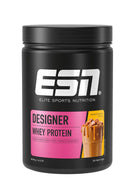
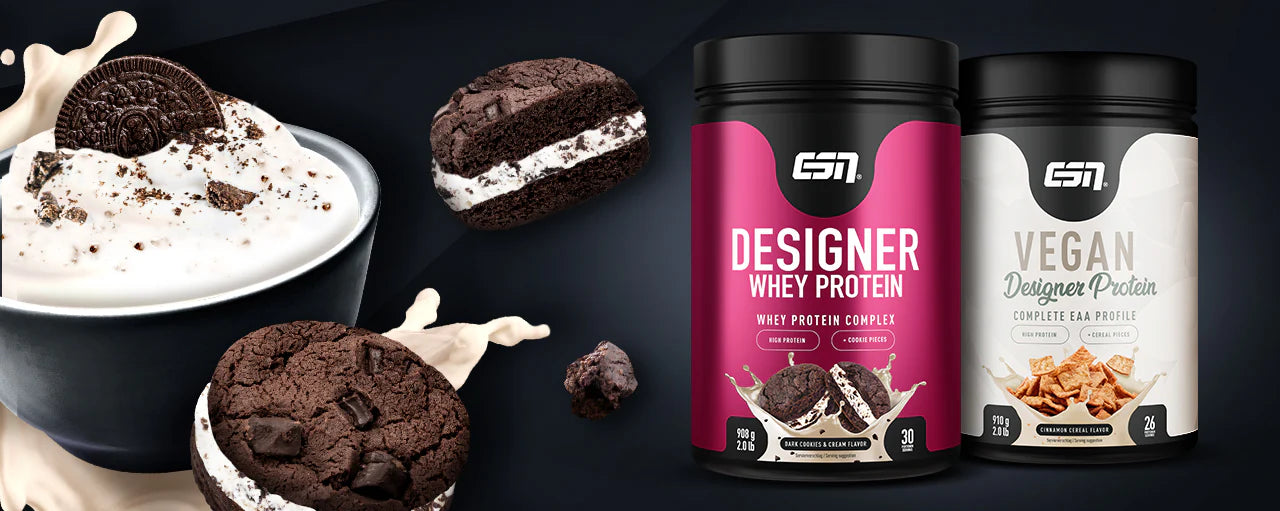
Want to take your protein intake to a new level? With the ESN Designer Whey Protein or the vegan protein powder ESN Vegan Designer Protein you boost your bulking!
- The best-selling whey protein in Germany and Europe
- Low in sugar
- Very easy to digest, biologically intact, and gently produced
Carbohydrates help with muscle building

While proteins are indispensable for muscle synthesis, the body needs sufficient carbohydrates during training. These are stored in the muscles as glycogen and provide you with the necessary energy for training and building mass. Your nutrition plan should therefore contain sufficient carbohydrates.
Some of the carbohydrate-rich foods include:
- Basmati rice
- Pasta
- Grains (wheat, buckwheat, whole-grain rye)
- Whole-grain bread, pasta, and rice
- Oatmeal
- Honey
- Dates
Healthy Fats

Although fat should only make up a small part of your diet, you should not give up fat entirely. Because a fat-free nutrition plan can even hinder bulking during intensive training.[3]
In your diet, you should focus on healthy fats. These contribute to maintaining the hormone balance and the immune system.[4]
Some of the foods that are rich in healthy fats include:
- Nuts
- Olive oil
- Yogurt
- Avocado
- Cheese
- Eggs
- Salmon
Which foods belong in the nutrition plan during bulking?
To build mass, your diet or nutrition plan should contain many proteins, carbohydrates, and healthy fats. This includes lean meat, eggs, fish, low-fat dairy products, rice, vegetables, whole-grain products, nuts, legumes, and oatmeal.
People who eat vegetarian, thus giving up meat products, can fall back on various meatless options as a protein source. People who eat vegan can include many important nutrients in their diet for bulking with vegetables, whole-grain products, rice, and legumes. In addition, vegan protein powders and products for muscle building can be supplemented to provide the body with important nutrients.
The right supplements
The most important component for the nutrition for muscle building is protein. With a balanced and protein-rich diet, you can very well cover your daily protein requirements. If you have difficulty with this or want to additionally support bulking, we recommend our protein powders: e.g. Germany's most popular whey protein powder ESN Designer Whey or, for vegan muscle building, the ESN Vegan Designer Protein.
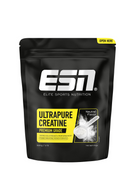
And not to forget: Creatine. It can improve your physical performance during short-term, intensive activities and support you in increasing your muscle strength. For this, we recommend our high-quality ESN Ultrapure Creatine.
- Simply mix with water, juice, or the protein shake
- Good solubility thanks to micro-fine powder consistency
- Suitable for vegans
Speaking of training: If you want to take your workout to a new level, you can achieve this with the ESN Crank Pump Pro. The Pre-Workout- and Pump-Booster ensures a maximally effective workout, so that you achieve the perfect muscle stimulation.
This is what your nutrition plan for bulking can look like
Bulking is your goal? Then you can put together your own nutrition plan with our tips. How nutrition can look like on a sample day, you see here:
For effective bulking, we assume a sample calorie requirement of 3300 kcal. With the sample nutrition plan for one day, you consume a total of 3336 kcal, of which 227.4 grams protein and 101.6 grams fat .
Breakfast
- 150 grams of oatmeal: 508 kcal / 20.3 grams of protein / 9.8 grams of fat
- 100 grams of low-fat quark: 72 kcal/ 14 grams of protein / 0.0 grams of fat
- 5 grams of chia seeds: 16 kcal / 0.6 grams of protein / 1.2 grams of fat
- 1 banana: 90 kcal / 1.2 grams of protein / 0.2 grams of fat
This breakfast provides you with a total of 686 kcal, 36.1 grams protein and 11.2 grams fat.
The first snack
- 2 slices of whole-grain bread: 166 kcal/ 5.6 grams of protein / 1.9 grams of fat
- 40 grams of Gouda: 150 kcal / 8.8 grams of protein / 12.8 grams of fat
- 20 grams of butter:148 kcal / 0.2 grams of protein / 16.4 grams of fat
The first snack thus provides you with 464 kcal, 14.6 grams protein and 31.1 grams fat.
Lunch
- 250 grams of salmon fillet: 376 kcal / 40 grams of protein / 24 grams of fat
- 100 grams of rice: 360 kcal / 8.7 grams of protein / 0.8 grams of fat
With this lunch, you consume a total of 736 kcal, 48.7 grams protein and 24.8 grams fat .
The second snack
- 50 grams of trail mix: 242 kcal / 6.5 grams of protein / 13.4 grams of fat
- 200 grams of cottage cheese: 186 kcal / 21.6 grams of protein / 8.2 grams of fat
- 1 banana: 90 kcal / 1.2 grams of protein / 0.2 grams of fat
With the second snack, you consume a total of 518 kcal, 29.3 grams protein and 21.8 grams fat .
Dinner
- 400 grams of chicken breast: 464 kcal / 80 grams of protein / 16 grams of fat
- 100 grams of rice: 360 kcal/ 8.7 grams of protein / 0.8 grams of fat
- 200 grams of broccoli: 68 kcal / 8 grams of protein / 0.4 grams of fat
With this dinner, you provide your body with a total of 892 kcal, 96.7 grams protein and 17.2 grams fat.
Conclusion: This is how you put together your individual nutrition plan for building mass
Since every body requires a different amount of calories and macronutrients—that is, protein, carbohydrates, and fat—it is not possible to create a one-size-fits-all nutrition plan for building muscle mass. Once you have calculated your required calorie surplus, you should make sure that your meals provide your body with important proteins, carbohydrates, and fats. Many foods are not only healthy but also provide several important nutrients at once. For example, eggs contain both healthy fats and protein. Different dietary supplements are suitable for supporting the body particularly before, during, and after training in workouts and muscle building.
If you follow these basic tips when creating your nutrition plan, nothing will stand in the way of effective muscle mass gain.
Sources
- Insert EU Directive health claims on protein and muscle mass here
- https://www.ncbi.nlm.nih.gov/pmc/articles/PMC5794245/
- https://link.springer.com/article/10.2165/00007256-200434050-00004
- https://nutritionj.biomedcentral.com/articles/10.1186/s12937-017-0271-4
